
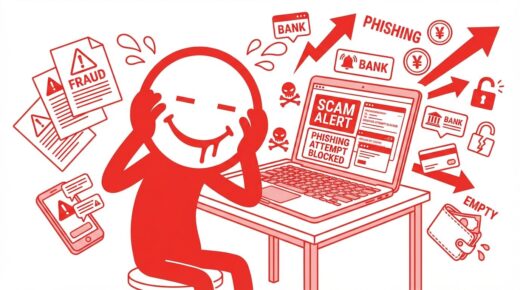
“I never thought I’d fall for a scam…”
If that sounds like you, you’re not alone. Many victims believed they were safe—until it happened.
A 2024 survey revealed that 14% of people have experienced online fraud.
In this article, you’ll find five real-life scam stories, why they happened, and the exact steps you can take to protect yourself.
These are not distant stories—they could happen to anyone, even tomorrow.
🔍 Why Ordinary People Get Scammed
You might think:
“Only people who aren’t tech-savvy get scammed, right?”
Not true.
Scammers are becoming more sophisticated every year. Even people familiar with smartphones and computers can fall victim due to a moment of carelessness or emotional pressure.
Let’s dive into the real cases.
1. Amazon Phishing Scam — ¥120,000 Lost (Case A, Male, 30s)
What Happened
A received an email:
“Important: Your Amazon account has been accessed illegally. Please verify within 24 hours.”
He clicked the link, saw a login page identical to Amazon, and entered his ID, password, and credit card details.
Three days later, his credit card company contacted him about suspicious charges—¥120,000 had been spent without his knowledge.
Why He Was Tricked
- A perfectly crafted fake website
- Urgent wording (“within 24 hours”)
- Familiar service lowered his guard
How He Responded
- Contacted his credit card company and froze the card
- Filed a police report (#9110 in Japan)
- Changed all passwords from the official Amazon site
- Negotiated compensation → Full refund after 2 months
✔️ How to Prevent Phishing Scams
- Never click links in emails
- Always check the URL
- Beware of urgent messages
- Enable two-factor authentication
- Use reputable security software
2. Fake Virus Alert Scam — Paid ¥30,000 for Fake Support (Case B, Female, 50s)
What Happened
While browsing recipes, B’s screen suddenly turned red with loud warning sounds:
“Warning! Your PC is infected! Call 0120-XXX-XXX immediately!”
Panicked, she called the number and paid ¥30,000 for fake “remote support.”
Why She Was Tricked
- Loud alarms and full-screen warnings
- Pressure to act immediately
- Scammer spoke fluent Japanese
How She Responded
- Consulted family and realized it was a scam
- Contacted credit card company
- Reported to consumer center (188)
→ Money was not recovered
✔️ How to Avoid Fake Virus Alerts
- Real warnings never take over your entire screen
- Stay calm—panic is the scammer’s weapon
- Force close your browser or restart
- Never call numbers shown in pop-up warnings
- Use only legitimate antivirus software
3. Fake Shopping Site — ¥150,000 Lost on a Luxury Watch (Case C, Male, 40s)
What Happened
C found a luxury watch normally priced at ¥300,000 being sold for ¥150,000.
He paid via bank transfer… and the site disappeared.
Why He Was Tricked
- Price was too good to be true
- “Only 3 left!” pressure
- Bank transfer only
- Natural-looking Japanese text
How He Responded
- Contacted the bank to freeze the account
- Filed a police report
- Reported to consumer center
→ Money was not recovered
✔️ How to Spot Fake Shopping Sites
- Extremely low prices
- Bank transfer only = danger
- Check company information
- Verify the URL (https + proper domain)
- Look for unnatural Japanese or typos
- Search reviews (“site name + scam”)
- Check for legal business information
4. International Romance Scam — ¥3.2 Million Lost (Case D, Female, 50s)
What Happened
D met a foreign man on SNS claiming to be a doctor in the U.S.
He sent affectionate messages daily and later introduced a “guaranteed investment.”
She invested small amounts at first—¥100,000 became ¥150,000.
Then she invested more: ¥50,000 → ¥100,000 → ¥150,000…
Total: ¥3.2 million.
When she tried to withdraw, he demanded “taxes” and “fees.”
A friend finally told her it was a scam.
Why She Was Tricked
- Emotional manipulation
- Small initial profit to build trust
- Gradual increase in investment
- Illusion of a “special relationship”
How She Responded
- Stopped sending money
- Contacted police (#9110)
- Consulted a lawyer
→ Most of the money was not recovered
✔️ Signs of Romance/Investment Scams
- Random foreigner contacts you on SNS
- Shows affection too quickly
- Model-like profile photos
- Claims high-status jobs
- Avoids meeting in person
- Offers “guaranteed profit” investments
- Shows small initial returns
- Asks for money for any reason
5. One-Click Scam — Paid ¥50,000 Out of Fear (Case E, Male, 20s)
What Happened
E clicked an adult video link.
Suddenly:
“Registration complete! Pay ¥99,800 within 3 days.”
His IP address and device info appeared, and a fake camera shutter sound played.
Panicked, he called the number and paid ¥50,000 in electronic money.
Why He Was Tricked
- Fake shutter sound
- Displayed IP address
- Embarrassment prevented him from asking for help
- “Discount” made it feel legitimate
How He Responded
- Called consumer hotline (188)
- Contacted electronic money company → already used
- Filed a police report
→ Money not recovered
✔️ Correct Response to One-Click Scams
- Never pay — the contract is legally invalid
- Do not call or email
- Close the browser and clear cache
- Understand that nothing will happen
- Consult 188 or #9110 if anxious
🔐 10 Golden Rules to Protect Yourself From Online Scams
Prevention
- Doubt “too good to be true” deals
- Don’t rush under pressure
- Never enter personal info without checking the site
- Avoid clicking links in emails/SMS
- Enable two-factor authentication
If You Suspect a Scam
- Consult someone immediately
- Never decide alone
- Search for information (“site name + scam”)
If You Are a Victim
- Contact relevant institutions
- Keep all evidence (screenshots, emails, URLs)
🧠 Final Message: “I’m Safe” Is the Most Dangerous Thought
All five victims believed they were safe.
Scammers target that exact moment of overconfidence.
Protect yourself by staying informed, staying calm, and asking for help when needed.
Share this article with your family and friends—awareness saves lives.
✅ Final Checklist (Do These Today)
- Enable 2FA on major services
- Stop reusing passwords
- Update your security software
- Promise yourself not to click suspicious links
- Share this article with someone you care about