
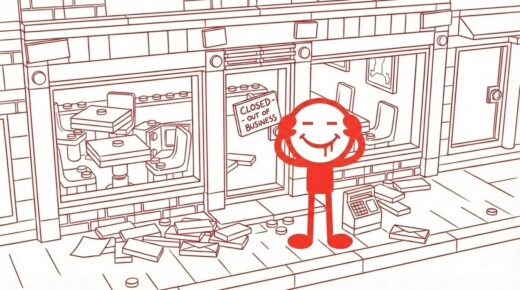
Opening a café is a beautiful dream.
But in the United States, over 50% of independent cafés close within the first three years.
Even passionate owners often fall into unexpected traps.
To help you avoid the same mistakes, here are five real café startup failure stories from U.S. café owners, along with practical strategies you can apply today.
1. Believing “A Good Location Guarantees Success”
What Happened
A (female, 30s) opened her café just 3 minutes from a busy subway station in a major U.S. city.
She thought:
“There are so many people walking by — customers will naturally come.”
But six months later, sales were less than half of her projections.
She closed the café within a year.
Why It Happened
The area had high foot traffic but low stopping traffic.
People were:
- Rushing to work
- Students heading to class
- Shoppers passing through
No one had time to stop for coffee.
Worse, there were three major chain cafés (Starbucks, Dunkin’, Peet’s) within a few blocks.
✔️ How to Avoid This Mistake
Before choosing a location:
- Conduct time‑of‑day foot traffic analysis
- Observe whether people stop or just pass through
- Identify your target customer’s behavior
- Analyze all cafés within a 0.3-mile radius
- Check pricing, customer demographics, and peak hours
Ideal U.S. café locations:
- Residential neighborhoods
- Office districts
- Near universities
- Areas with fewer direct competitors
Location cannot be changed later — research determines your fate.
2. Assuming “Passion Alone Will Bring Customers”
What Happened
B (male, 40s) loved specialty coffee and invested heavily in:
- A high-end roasting machine
- Premium single-origin beans
- $7–$8 pour-over coffee
But his café was in a family-oriented suburban neighborhood.
Why It Failed
Local residents wanted:
- A casual, kid-friendly café
- Affordable drinks ($3–$4 range)
- A comfortable place to chat
His passion didn’t match the community’s needs.
✔️ How to Avoid This Mistake
Before opening:
- Conduct neighborhood surveys
- Visit nearby cafés and observe customers
- Identify your target customer’s lifestyle and needs
Balance passion and demand:
- 70% customer needs
- 30% personal passion
How to use your passion wisely:
- Offer one or two premium “signature” drinks
- Keep core menu items affordable
- Position specialty items as “upgrades”
A café succeeds when customers love it — not just the owner.
3. Running Out of Cash Due to Poor Financial Planning
What Happened
C (female, 20s) opened her café with $50,000 in savings.
Breakdown:
- Interior renovation: $20,000
- Equipment: $15,000
- Rent & deposit: $10,000
- Supplies: $5,000
Everything seemed fine — until month three.
Why It Failed
She only calculated startup costs, not operating costs.
Forgotten expenses included:
- Working capital
- Emergency funds
- Marketing budget
- Slow initial sales
Her monthly fixed costs were $6,000, but sales were only $3,000.
Her savings disappeared in months.
✔️ How to Avoid This Mistake
Correct U.S. café budgeting:
- Secure 6 months of operating capital
- Calculate break-even point
- Estimate daily customer count needed
Example:
If monthly fixed costs = $6,000
Working 26 days/month → Need $230/day
If average ticket = $8 → Need 29 customers/day
Funding options in the U.S.:
- SBA loans
- Local small business grants
- Crowdfunding
- Community support campaigns
Financial stress kills cafés faster than anything else.
4. Trying to Do Everything Alone and Burning Out
What Happened
D (male, 30s) tried to run his café solo to save labor costs.
His schedule:
- Open 7 AM
- Close 9 PM
- Only 2 days off per month
- Handling prep, cooking, cleaning, accounting, and social media
After six months, he collapsed from exhaustion and had to close for a month — losing all revenue.
Why It Failed
Running a café alone means:
- If you get sick, the café stops
- No time to rest or think strategically
- No creativity or innovation
- No personal life
He saved on labor but paid with his health.
✔️ How to Avoid This Mistake
Sustainable U.S. café operations:
- Hire part-time staff from day one
- Treat labor cost as an investment
- Shorten business hours
- Take at least 1–2 days off weekly
Efficiency tips:
- Simplify the menu
- Batch prep ingredients
- Outsource accounting or website management
Your health is the café’s engine — protect it.
5. Offering Too Many Menu Items and Losing Control
What Happened
E (female, 40s) wanted to please everyone, so she created a menu with 50+ items:
- 15 coffees
- 10 teas
- 8 smoothies
- 20 food items
- 10 desserts
Why It Failed
Too many menu items caused:
- High food waste
- Complex inventory
- Slow service
- Staff mistakes
- Higher food costs
- Customer confusion
She eventually cut the menu in half — but it was too late.
✔️ How to Avoid This Mistake
Menu design principles:
- Choose 3 signature items
- Keep total menu under 20–25 items
- Reuse ingredients across multiple dishes
- Add seasonal specials for variety
Benefits of a smaller menu:
- Lower food waste
- Faster service
- Higher customer satisfaction
- Stronger brand identity
In cafés, less is more.
⭐️5 Key Lessons From These Café Failures
- Research your location thoroughly
- Prioritize customer needs over personal passion
- Prepare more capital than you think you need
- Build a sustainable work system — don’t do everything alone
- Keep your menu focused and efficient
Failure isn’t the enemy — failing to learn from others is.
⭐️Take the Next Step: Start Your Café Business Plan
If you’re serious about opening a café, your next step is to write a business plan.
Putting your ideas on paper reveals blind spots and strengthens your strategy.
With careful preparation, customer-focused thinking, and sustainable planning,
your café can become a beloved community spot in the U.S.
I’m cheering for your success.